
Introduction
Martial arts are ancient practices that combine physical prowess, mental discipline, and philosophical teachings. These arts have been practiced for centuries across various cultures and continue to captivate people worldwide with their blend of combat techniques, self-defence strategies, and holistic benefits. This blog explores the rich history, diverse styles, and the profound impact of martial arts on individuals and society.
Section 1: The History of Martial Arts
Martial arts have deep-rooted histories that reflect the cultural heritage and philosophies of different civilizations.
- Ancient Origins: Martial arts date back thousands of years, with early forms practiced in China, India, and Greece. Techniques evolved from the need for self-defence, hunting, and military combat.
- Asian Influence: Many of the most well-known martial arts originate from Asia. For example, Chinese martial arts, or Kung Fu, have been practiced for over 4,000 years and are known for their fluid movements and philosophical teachings. Japanese martial arts, such as Karate and Judo, emphasize discipline and respect.
- Western Development: In the West, martial arts gained popularity in the 20th century, influenced by Eastern philosophies and the rise of mixed martial arts (MMA). Today, martial arts are practiced globally, transcending cultural boundaries.
Section 2: Diverse Styles of Martial Arts
Martial arts encompass a wide range of styles, each with its unique techniques, philosophies, and benefits.
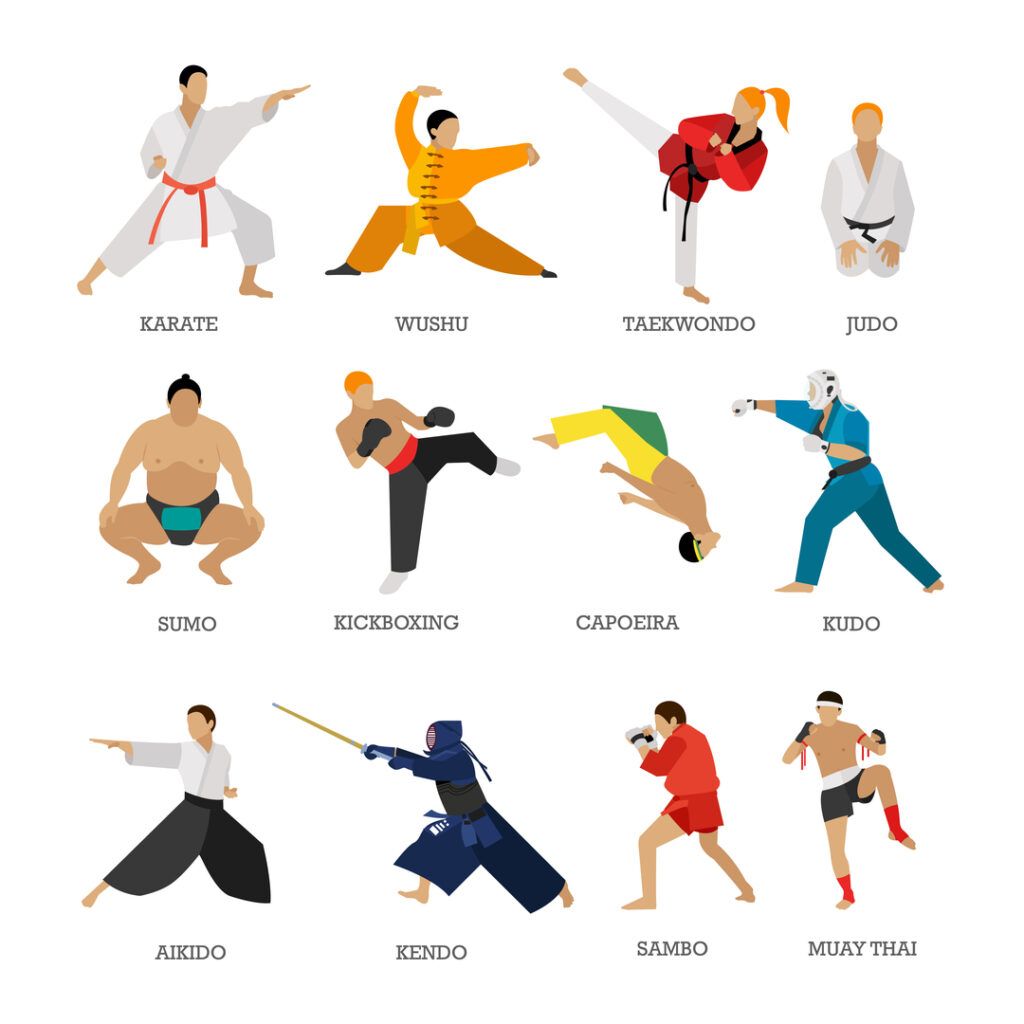
- Karate: Originating from Okinawa, Japan, Karate focuses on striking techniques using punches, kicks, knees, and elbows. It emphasizes speed, power, and precision.
- Taekwondo: A Korean martial art known for its dynamic kicks and rapid footwork. Taekwondo also includes forms (patterns) and sparring.
- Judo: Developed in Japan, Judo focuses on throws, joint locks, and grappling techniques. It aims to subdue an opponent using leverage and balance rather than brute strength.
- Brazilian Jiu-Jitsu (BJJ): A martial art specializing in ground fighting and submission holds. BJJ emphasizes technique and strategy to overcome larger opponents.
- Muay Thai: Known as the “Art of Eight Limbs,” Muay Thai from Thailand uses punches, kicks, elbows, and knees. It is highly effective for both striking and clinch work.
- Kung Fu: An umbrella term for Chinese martial arts, Kung Fu encompasses a variety of styles, including Wing Chun, Shaolin, and Tai Chi. Kung Fu emphasizes fluid movements, coordination, and internal energy (Qi).
Section 3: The Benefits of Practicing Martial Arts
Martial arts offer numerous physical, mental, and emotional benefits, making them a holistic practice for individuals of all ages.
- Physical Fitness: Martial arts improve cardiovascular health, strength, flexibility, and endurance. They provide a full-body workout that enhances overall fitness.
- Self-Discipline and Focus: Training in martial arts requires consistent practice, dedication, and mental focus. These qualities translate into other areas of life, promoting self-discipline and goal-setting.
- Self-Defence: Learning martial arts equips individuals with practical self-defence skills, boosting confidence and personal safety.
- Stress Relief: The physical activity and meditative aspects of martial arts help reduce stress and anxiety. They offer a constructive outlet for releasing tension and improving mental well-being.
- Cultural Appreciation: Martial arts expose practitioners to different cultures and philosophies, fostering a greater appreciation for global traditions and values.
Section 4: Martial Arts Philosophy
Beyond physical techniques, martial arts are deeply rooted in philosophical teachings that guide practitioners’ lives.
- Respect and Humility: Martial arts emphasize respect for oneself, others, and the environment. Humility is a core value, encouraging practitioners to remain grounded and open to learning.
- Perseverance and Resilience: The journey in martial arts is often challenging, requiring perseverance and resilience to overcome obstacles and setbacks.
- Mind-Body Connection: Many martial arts practices incorporate meditation and breathing exercises to cultivate a strong mind-body connection. This holistic approach promotes mental clarity and emotional balance.
- Ethical Conduct: Martial arts teach ethical behaviour and responsibility, encouraging practitioners to use their skills for positive purposes and to uphold justice.
Section 5: Getting Started with Martial Arts
If you’re interested in exploring martial arts, here are some steps to help you get started:
- Research Styles: Learn about different martial arts styles and identify which one resonates with your interests and goals. Consider factors such as physical demands, training environment, and philosophical teachings.
- Find a School: Look for reputable martial arts schools or dojos in your area. Attend trial classes to experience the training atmosphere and instructor’s teaching style.
- Set Goals: Determine your objectives for practicing martial arts, whether it’s fitness, self-defence, competition, or personal growth.
- Commit to Training: Consistency is key in martial arts. Commit to regular training sessions and be patient with your progress. Remember that martial arts are a lifelong journey of learning and self-improvement.
Conclusion
Martial arts offer a unique blend of physical training, mental discipline, and philosophical wisdom. They provide a path to personal growth, self-defenses, and cultural enrichment. Whether you’re drawn to the striking techniques of Karate, the grappling prowess of Judo, or the meditative practices of Tai Chi, martial arts have something to offer everyone. Embrace the journey, respect the traditions, and discover the profound impact martial arts can have on your life.