
Introduction
Parkour and free running are dynamic disciplines that revolve around efficient and creative movement through urban and natural environments. Originating from France, these practices have gained global popularity, captivating people with their fluidity, athleticism, and artistry. This article delves into the essence of parkour and free running, exploring their history, techniques, benefits, and the differences between the two.
Section 1: The Origins of Parkour and Free running
Understanding the roots of parkour and free running provides insight into their philosophies and practices.
- Parkour: Developed in the late 1980s by David Belle in France, parkour (also known as “l’art du déplacement” or the art of movement) focuses on moving efficiently from one point to another, overcoming obstacles using running, jumping, climbing, and rolling. Inspired by military obstacle course training, parkour emphasizes speed, agility, and precision.
- Free running: Coined by Sébastien Foucan, free running emerged as a more expressive evolution of parkour. While it retains the fundamental principles of parkour, free running incorporates acrobatics, tricks, and creative movements, emphasizing artistic expression and freedom.
Section 2: Key Techniques in Parkour and Free running
Both parkour and free running involve a range of techniques that practitioners use to navigate their environments. Here are some fundamental moves:
- Vaults: Vaults involve propelling the body over obstacles such as railings or walls using hands and feet. Common vaults include the speed vault, kong vault, and lazy vault.
- Precision Jumps: These jumps require landing accurately on a specific spot, often on narrow surfaces like railings or ledges. Precision and control are crucial.
- Wall Runs: Wall runs involve running vertically up a wall to reach higher surfaces. This technique is often combined with a push-off to gain extra height.
- Rolls: Rolls help dissipate the impact of jumps and landings, protecting the body from injury. The shoulder roll is a commonly used technique.
- Cat Leaps: Cat leaps involve jumping from one surface to another, typically landing in a crouched position with hands gripping the edge of the landing surface.
- Flips and Tricks: In free running, acrobatic elements such as flips, spins, and twists are integrated into movement sequences. These add a creative and artistic dimension to the discipline.
Section 3: Differences Between Parkour and Free running
While parkour and free running share similarities, they have distinct focuses and philosophies:
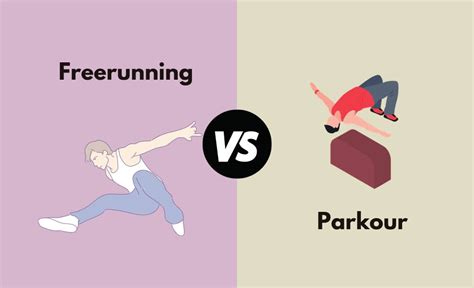
- Parkour: Emphasizes efficiency and practicality in movement. The goal is to move swiftly and effectively through the environment, overcoming obstacles with precision and minimal energy expenditure.
- Free running: Focuses on creativity and expression. While it incorporates parkour techniques, free running encourages adding acrobatic moves and personal style, making each movement sequence unique.
Section 4: Benefits of Practicing Parkour and Free running
Engaging in parkour and free running offers a wide range of physical, mental, and social benefits:
- Physical Fitness: Both disciplines improve cardiovascular health, strength, agility, and flexibility. They provide a full-body workout that enhances overall fitness.
- Mental Resilience: Overcoming challenges and mastering new techniques build mental toughness, perseverance, and problem-solving skills.
- Confidence and Self-Esteem: Successfully navigating obstacles boosts self-confidence and a sense of accomplishment.
- Creative Expression: Free running, in particular, allows for artistic expression through movement, fostering creativity and individuality.
- Community and Camaraderie: Parkour and free running communities are often tight-knit and supportive, providing a sense of belonging and shared passion.
Section 5: Getting Started with Parkour and Free running
For those interested in exploring parkour and free running, here are some tips to help you get started:
- Find a Community: Look for local parkour and free running groups, gyms, or classes. Joining a community can provide guidance, support, and opportunities to train with experienced practitioners.
- Start with Basics: Begin by mastering fundamental techniques such as vaults, rolls, and precision jumps. Focus on building strength, agility, and control.
- Prioritize Safety: Always warm up before training and practice in a safe environment. Use proper techniques to minimize the risk of injury, and progress at your own pace.
- Watch and Learn: Study videos of skilled parkour and free running athletes to understand different techniques and styles. Learning from others can provide inspiration and valuable insights.
- Stay Consistent: Regular practice is key to improvement. Set goals, track your progress, and stay motivated by challenging yourself with new movements and sequences.
Conclusion
Parkour and free running are exhilarating disciplines that blend athleticism, creativity, and mental resilience. Whether you’re drawn to the efficiency of parkour or the expressive freedom of free running, both offer a unique way to connect with your environment and push the limits of human movement. Embrace the journey, respect the principles, and discover the transformative power of parkour and free running.