The Ultimate Guide to Digital Detox: Reclaim Your World in a Hyper-Connected Age

In today’s hyper-connected world, where our devices are practically extensions of ourselves, the concept of a digital detox has become a powerful antidote to the constant hum of digital noise. This guide will help you reclaim your time, focus, and well-being by stepping away from technology and reconnecting with the physical world and the people around you.

What is a Digital Detox?

A digital detox is a period of intentional disconnection from technology, including smartphones, computers, tablets, and social media platforms. It’s a chance to re-engage with the physical world and the people around you, fostering a healthier, more balanced relationship with technology.

Why is Digital Detox Important?

The constant influx of digital notifications, the lure of endless scrolling, and the pressure to be perpetually “on” have a profound impact on our well-being. It fuels stress, anxiety, and a pervasive sense of being overwhelmed. Excessive screen time disrupts sleep patterns, reduces physical activity, and can even strain relationships. A digital detox empowers individuals to create boundaries, fostering a healthier, more balanced relationship with technology.

Benefits of a Digital Detox

  1. Improved Mental Health: Stepping away from the digital world significantly reduces stress and anxiety, promoting a clearer mind and a more positive outlook.
  2. Enhanced Productivity: Freed from the constant barrage of notifications and the temptation of social media, you’ll find it easier to focus on tasks, maximizing efficiency during work or study hours.
  3. Better Sleep: Reducing screen time, particularly before bed, leads to improved sleep quality by minimizing exposure to blue light, which disrupts our natural sleep cycles.
  4. Strengthened Relationships: A digital detox creates space for face-to-face interactions, fostering deeper connections and more meaningful relationships with friends and family.
  5. Increased Physical Activity: Disconnecting encourages physical activity, whether it’s taking a walk, practicing yoga, or simply enjoying the outdoors.

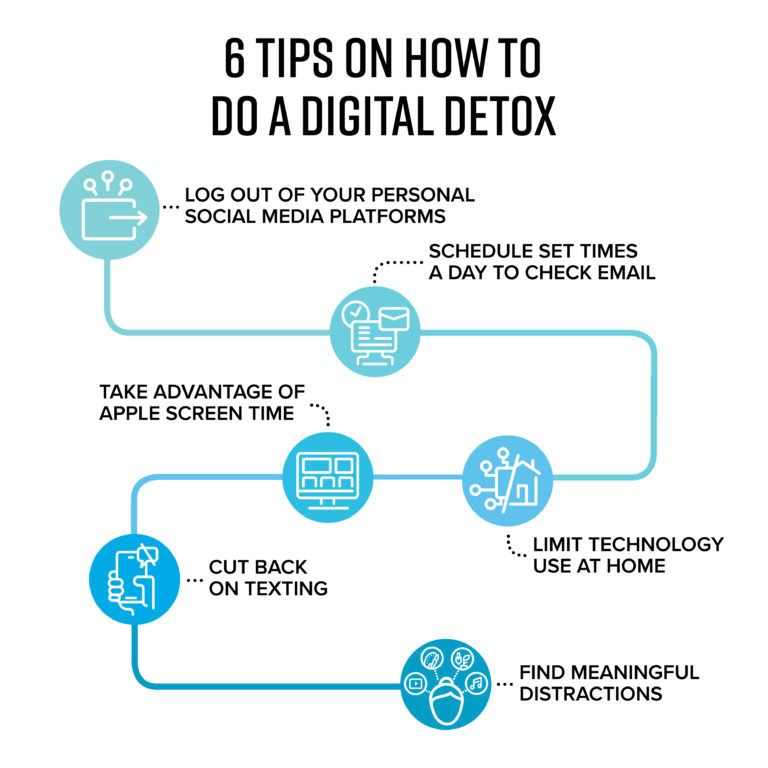
How to Undertake a Digital Detox

  1. Set Clear Intentions: Define why you’re undertaking a digital detox. Whether it’s to alleviate stress, improve relationships, or enhance overall well-being, having a clear purpose will anchor your commitment.
  2. Assess Your Digital Footprint: Quantify your digital usage across all devices using apps like RescueTime, Screen Time (iOS), or Digital Wellbeing (Android). Review your usage data and categorize it into “Necessary” (work-related, educational) and “Unnecessary” (social media scrolling, random browsing).
  3. Set Personalized Goals: Based on your analysis, set clear, achievable goals for reducing unnecessary digital consumption. For example, if you’re spending four hours a day on social media, could you reduce it to two?
  4. Find Replacement Practices: Engage in hobbies or activities that distract your mind and occupy your hands, such as reading, journaling, or exercising.
  5. Shore Up Social Bonds: Spend more time with friends and family in person, fostering deeper connections and reducing feelings of loneliness.
  6. Practice Mindfulness: Use mindfulness techniques to stay present and reduce the urge to reach for your devices. Apps like Calm or Headspace can help.
  7. Create a Digital Detox Plan: Plan specific times to unplug, such as during meals, before bed, or on weekends. Gradually increase the duration of your detox as you become more comfortable.
  8. Reflect and Adjust: Regularly reflect on your progress and adjust your goals and strategies as needed. Celebrate your successes and learn from any challenges.

Conclusion

A digital detox is not about completely abandoning technology but about using it mindfully and intentionally. By taking regular breaks from screens, you can improve your mental health, enhance productivity, and strengthen relationships. Embrace the journey of digital detox and reclaim your world in a hyper-connected age.

Would you like more tips on how to successfully implement a digital detox in your life?
The Future of Tech & Gadgets: Innovations Shaping Our World

Technology and gadgets have become integral to our daily lives, driving innovation and shaping the future. From cutting-edge scientific discoveries to the latest in consumer electronics, the tech landscape is ever-evolving. This comprehensive blog delves into various aspects of tech and gadgets, exploring the latest trends, ground-breaking innovations, and their impact on society.

The Rise of Artificial Intelligence and Machine Learning

Artificial Intelligence (AI) and Machine Learning (ML) are revolutionizing various industries, offering new ways to analyse data, automate processes, and enhance decision-making.

  1. AI in Healthcare: AI-powered tools are transforming healthcare by improving diagnostics, personalizing treatment plans, and streamlining administrative tasks. For example, AI algorithms can analyse medical images to detect early signs of diseases like cancer.
  2. Autonomous Vehicles: Self-driving cars are becoming a reality, with companies like Tesla, Waymo, and Uber leading the charge. These vehicles use AI and ML to navigate roads, avoid obstacles, and ensure passenger safety.
  3. Smart Assistants: Virtual assistants like Amazon’s Alexa, Apple’s Siri, and Google’s Assistant are becoming more sophisticated, offering personalized recommendations, controlling smart home devices, and even making purchases on behalf of users.
  4. AI in Finance: Financial institutions are leveraging AI for fraud detection, risk management, and customer service. Algorithms analyse transaction data to identify suspicious activities and predict market trends.

The Evolution of Consumer Electronics

Consumer electronics continue to evolve, offering smarter, more integrated, and user-friendly devices that enhance our daily lives.

  1. Smartphones: The latest smartphones feature advanced cameras, powerful processors, and innovative designs. Foldable phones, like the Samsung Galaxy Z Fold, are pushing the boundaries of mobile technology.
  2. Wearables: Smartwatches, fitness trackers, and wearable health devices are gaining popularity, providing users with real-time health data, activity tracking, and seamless connectivity with other devices.
  3. Smart Home Devices: From smart speakers and lighting systems to security cameras and thermostats, smart home devices are making our homes more efficient, secure, and comfortable.
  4. Gaming Consoles: The gaming industry is booming, with next-gen consoles like the PlayStation 5 and Xbox Series X delivering immersive gaming experiences with stunning graphics and fast load times.

The Impact of Virtual and Augmented Reality

Virtual Reality (VR) and Augmented Reality (AR) are transforming entertainment, education, and professional fields by creating immersive, interactive experiences.

  1. Gaming: VR headsets like the Oculus Quest and PlayStation VR offer players an unparalleled level of immersion, allowing them to step into virtual worlds and interact with their surroundings.
  2. Education: AR and VR are being used to create virtual classrooms and training simulations. Students can explore historical sites, conduct virtual science experiments, and gain hands-on experience in a safe, controlled environment.
  3. Healthcare: VR is being used for pain management, physical therapy, and medical training. Surgeons can practice complex procedures in a virtual environment, enhancing their skills and reducing errors.
  4. Retail: AR is revolutionizing the shopping experience by allowing customers to visualize products in their own space. Apps like IKEA Place let users see how furniture would look in their homes before making a purchase.

Sustainable Technology and Green Gadgets

As the world becomes more environmentally conscious, sustainable technology and eco-friendly gadgets are gaining traction.

  1. Renewable Energy Solutions: Innovations in solar, wind, and hydrogen energy are crucial for reducing our reliance on fossil fuels and mitigating climate change. Home solar panels and portable solar chargers are becoming more accessible and affordable.
  2. Electric Vehicles: Electric vehicles (EVs) are on the rise, with companies like Tesla, Nissan, and Chevrolet leading the way. EVs reduce greenhouse gas emissions and are supported by an expanding network of charging stations.
  3. Energy-Efficient Appliances: Modern appliances are designed to be more energy-efficient, reducing electricity consumption and lowering utility bills. Smart thermostats, LED lighting, and energy-saving kitchen appliances are popular choices.
  4. Eco-Friendly Materials: Sustainable materials like bamboo, recycled plastics, and biodegradable products are being used in tech gadgets, reducing environmental impact and promoting sustainability.

The Frontier of Space Exploration and Technology

Space exploration and technology are expanding our understanding of the universe and opening up new possibilities for the future.

  1. Space Missions: Recent missions, such as NASA’s Mars Rover Perseverance and SpaceX’s manned missions, are paving the way for future exploration and potential colonization of other planets.
  2. Satellite Technology: Satellites play a crucial role in communication, weather forecasting, and Earth observation. Advances in satellite technology are improving data accuracy and connectivity.
  3. Commercial Space Travel: Companies like SpaceX, Blue Origin, and Virgin Galactic are developing commercial space travel, bringing the dream of space tourism closer to reality.
  4. Astrobiology: The search for extra-terrestrial life continues to captivate scientists and the public alike, with missions focused on identifying habitable environments beyond Earth.

The Future of Computing: Quantum and Edge Computing

Advances in computing technology are pushing the boundaries of what is possible, offering new solutions for complex problems and enhancing data processing capabilities.

  1. Quantum Computing: Quantum computers use qubits to perform calculations at speeds far beyond traditional computers. They have the potential to revolutionize fields like cryptography, materials science, and drug discovery.
  2. Edge Computing: Edge computing brings data processing closer to the source of data generation, reducing latency and improving real-time decision-making. This technology is crucial for IoT devices and autonomous systems.

Conclusion The world of tech and gadgets is ever-evolving, offering new possibilities and challenges. From AI and VR to sustainable technology and space exploration, these advancements are transforming our lives and shaping the future. By staying informed and embracing innovation, we can harness the power of technology to create a better, more connected world. Whether you’re a tech enthusiast, a professional, or simply curious, the future of tech and gadgets promises exciting developments and endless opportunities for discovery.