
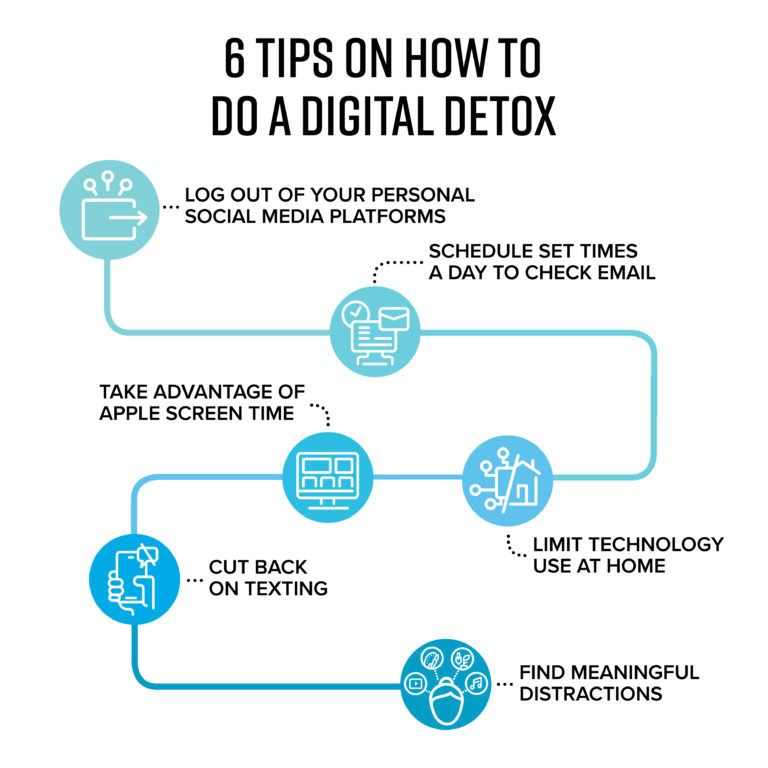
In today’s hyper-connected world, where our devices are practically extensions of ourselves, the concept of a digital detox has become a powerful antidote to the constant hum of digital noise. This guide will help you reclaim your time, focus, and well-being by stepping away from technology and reconnecting with the physical world and the people around you.
What is a Digital Detox?
A digital detox is a period of intentional disconnection from technology, including smartphones, computers, tablets, and social media platforms. It’s a chance to re-engage with the physical world and the people around you, fostering a healthier, more balanced relationship with technology.
Why is Digital Detox Important?
The constant influx of digital notifications, the lure of endless scrolling, and the pressure to be perpetually “on” have a profound impact on our well-being. It fuels stress, anxiety, and a pervasive sense of being overwhelmed. Excessive screen time disrupts sleep patterns, reduces physical activity, and can even strain relationships. A digital detox empowers individuals to create boundaries, fostering a healthier, more balanced relationship with technology.
Benefits of a Digital Detox
- Improved Mental Health: Stepping away from the digital world significantly reduces stress and anxiety, promoting a clearer mind and a more positive outlook.
- Enhanced Productivity: Freed from the constant barrage of notifications and the temptation of social media, you’ll find it easier to focus on tasks, maximizing efficiency during work or study hours.
- Better Sleep: Reducing screen time, particularly before bed, leads to improved sleep quality by minimizing exposure to blue light, which disrupts our natural sleep cycles.
- Strengthened Relationships: A digital detox creates space for face-to-face interactions, fostering deeper connections and more meaningful relationships with friends and family.
- Increased Physical Activity: Disconnecting encourages physical activity, whether it’s taking a walk, practicing yoga, or simply enjoying the outdoors.
How to Undertake a Digital Detox
- Set Clear Intentions: Define why you’re undertaking a digital detox. Whether it’s to alleviate stress, improve relationships, or enhance overall well-being, having a clear purpose will anchor your commitment.
- Assess Your Digital Footprint: Quantify your digital usage across all devices using apps like RescueTime, Screen Time (iOS), or Digital Wellbeing (Android). Review your usage data and categorize it into “Necessary” (work-related, educational) and “Unnecessary” (social media scrolling, random browsing).
- Set Personalized Goals: Based on your analysis, set clear, achievable goals for reducing unnecessary digital consumption. For example, if you’re spending four hours a day on social media, could you reduce it to two?
- Find Replacement Practices: Engage in hobbies or activities that distract your mind and occupy your hands, such as reading, journaling, or exercising.
- Shore Up Social Bonds: Spend more time with friends and family in person, fostering deeper connections and reducing feelings of loneliness.
- Practice Mindfulness: Use mindfulness techniques to stay present and reduce the urge to reach for your devices. Apps like Calm or Headspace can help.
- Create a Digital Detox Plan: Plan specific times to unplug, such as during meals, before bed, or on weekends. Gradually increase the duration of your detox as you become more comfortable.
- Reflect and Adjust: Regularly reflect on your progress and adjust your goals and strategies as needed. Celebrate your successes and learn from any challenges.
Conclusion
A digital detox is not about completely abandoning technology but about using it mindfully and intentionally. By taking regular breaks from screens, you can improve your mental health, enhance productivity, and strengthen relationships. Embrace the journey of digital detox and reclaim your world in a hyper-connected age.
Would you like more tips on how to successfully implement a digital detox in your life?